
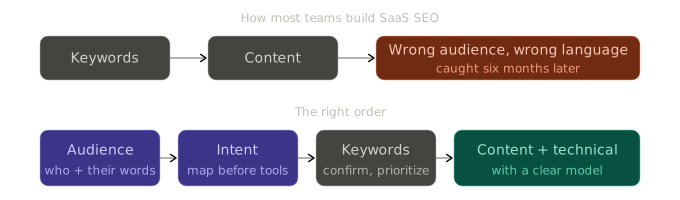
When a SaaS company comes to me with no SEO foundation, the first thing I do is not open Ahrefs. I don’t pull keyword data. I don’t audit the site. I ask about the audience.
Building a SaaS SEO strategy from scratch means starting with audience research: buyer personas, current customer interviews, and audience research tools that show you where your audience actually spends time and how they talk about their problems.
From there, you map intent before you touch a single keyword tool.
Everything else follows from that foundation: content, technical infrastructure, measurement.
The reason most SaaS SEO strategies fail isn’t a technical problem. It’s that the audience model was wrong from the start, and nobody caught it until six months of content had already been published to the wrong people.
Start with the Audience, Not the Keywords
Before you can figure out what to rank for, you need to understand who you’re ranking for and how they talk about the problem your product solves. These are different questions, and most teams skip the second one entirely.
I start with whatever customer data already exists. Sales call notes, support tickets, customer interviews, NPS responses. If the company has current customers, I want to hear in their own words why they bought, what they were searching for before they found the product, and what language they use to describe the problem. That vocabulary becomes the seed for everything downstream.
If customer interviews aren’t available or the company is early, I go to the review sites. Capterra, G2, Trustpilot, and similar platforms are underused research assets. The one and two-star reviews for your top competitors will show you exactly what frustrated buyers say when they’re trying to explain a problem to someone who might listen. That’s authentic search language. And SparkToro layers on top of that by showing you where this audience already goes online, what publications they read, what topics they engage with. It’s the difference between guessing where your buyers are and observing it directly.
The Missed Step That Kills Most SaaS SEO Strategies
Intent mapping. Specifically, not doing it, or doing it wrong.
Most “build your SaaS SEO strategy” guides treat intent as obvious. Target commercial keywords. Write comparison pages. Create use case content. But the real question is more fundamental: do you actually know what your buyers are searching for, at each stage of their awareness, in the language they use, not the language your product team uses?
The honest answer, for a lot of SaaS companies, is no. And that’s fine. Not knowing is not the problem. The problem is building a six-month content calendar on top of that uncertainty without a method for finding out.
There are a few systematic ways I use to map intent when the picture isn’t clear…
Correlative Analysis
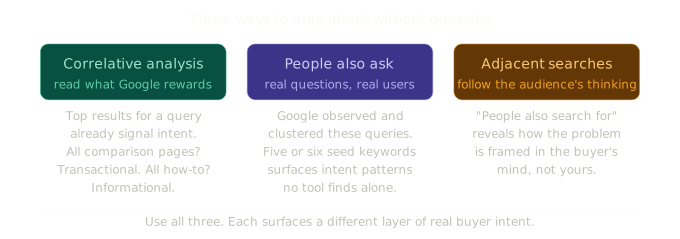
The first is correlative analysis. Look at what Google is currently rewarding for the search queries in your category. If the top results for a query are all comparison pages, that tells you Google has decided this is a transactional search. If they’re all how-to guides, it’s informational. The algorithm has already done the intent classification work. Reading those signals accurately costs nothing.
Start by looking at search results for your core industry. What related words are you seeing? What services and solutions do the other websites on offer display? Is it heavily information pages or product pages?
People Also Ask (PPA)
The second is People Also Ask. For any broad industry category keyword, the PAA box surfaces the genuine questions real users are typing. These aren’t keyword suggestions from a tool. They’re actual search behaviors Google has observed and clustered. Running through the PAA data for five or six seed keywords in your category will surface intent patterns you would never have found through standard keyword research alone.
Expand and review people also ask sections to uncover new ideas which have been validated by Google’s existing searcher insights they’ve collected. Use these as ways to uncover proven topics to write about that have an active audience.
Third-Party Data & Adjacent Niches
The third is adjacent searches. When you search a keyword in Google and scroll to the ‘people also search for’ at the bottom, you see the adjacent queries real users are making. Those relationships tell you how the audience’s thinking is moving. Someone who searches “project management software” and then “how to run better standups” is telling you something about the problem they’re actually trying to solve. Following that thread is more valuable than more keyword volume data.
When first-party data points are limited because you’re a startup, investigate adjacent spaces if competitors don’t always match. For example, you’re an HR solution that performs a new AI compliance readiness audit, consider looking into the broader HR software category if you’re an emerging proprietary solution.
Building the Keyword Strategy Around What You Find
Once you have a clear audience model and an honest map of intent, keyword research becomes a prioritization exercise rather than a discovery exercise. You’re not looking for opportunities. You’re confirming which of the opportunities your audience research already surfaced are worth pursuing and in what order. Keywords aren’t the universal source of truth, they are market indicators that validate your direction.
I organize keywords into three layers, which I outlined in more detail in my SaaS SEO mindset guide. There’s the demand-generation layer, where you’re creating content for people who don’t yet have language for what they’re looking for. There’s the existing-demand layer, where you’re capturing people actively searching for solutions in your category. And there’s the comparative layer, where buyers are evaluating options.
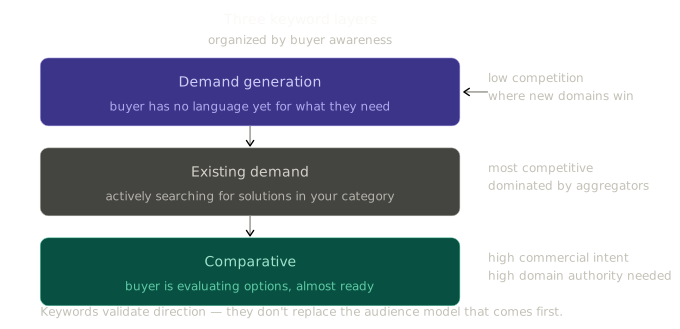
A common mistake at this stage is targeting only the middle bucket. The existing-demand keywords are usually the most competitive and the most dominated by review aggregators with decades of domain authority.
If you’re starting from scratch, fighting for “best CRM software” on day one is a losing strategy. Building authority in the demand-generation layer, where you’re answering questions that nobody else is answering well, is where a new domain can win faster and build relevance for the harder keywords over time.
Technical and Content Come After the Model Is Set
Once the audience model and intent map are in place, the structural work follows a clearer path. Technical SEO (crawlability, site speed, internal linking, indexability for both Google and AI crawlers) is table stakes. You can read more about that foundation in my post on getting your site indexed by LLMs. It needs to be right, but it’s not the strategy.
Content Development
Content development is where most of the early investment goes, and where the audience and intent work pays off. Every piece should map to a specific point in the buyer journey, target a specific intent signal you’ve already validated, and be written at the sophistication level of your actual reader. Not a beginner explainer padded to hit a word count. Something a Director of Marketing at a 200-person SaaS company would find genuinely useful.
Video & Audio Work For SEO
It doesn’t always have to be written content either, some search results can be won through producing video content hosted on Youtube. Or being featured on a podcast that links back to your brand in the annotated content. The main thing to keep in mind is discovering what is showing for a search result you’re going after through correlative SEO analysis.
SEO Performance Measurement
Measurement gets set up before any of this goes live. If you can’t connect organic search activity to pipeline events, you’ll never be able to defend the investment internally when someone asks why the SEO program isn’t producing revenue. The tracking infrastructure needs to be in place from day one, even if the data it’s collecting is thin at the start.
What “From Scratch” Actually Means
Building a SaaS SEO strategy from zero is not primarily a content problem or a technical problem. It’s a research problem. The teams that get it right spend more time on audience understanding before they publish anything than most teams spend on their entire first six months of content.
The questions worth sitting with at the start: Who is the audience, really? What do they want, in their words? Where do they consume content? Where do they actually search for products like yours? Not all of these are easy to answer. But they’re all answerable, systematically, if you know where to look.
If you’re starting from scratch and want a sanity check on your audience model before you build a content plan around it, that’s exactly the kind of work I do. Reach out and we can take a look together.